Trenčianske Teplice Spa
The Trenčianske Teplice Spa is one of the oldest in Slovakia. Its exceptional natural, sulphur-rich thermal water is the foundation of the spa. This healing water, which has a temperature of between 37 and 40 °C, flows directly into the pools from six springs without any treatment, and is used to treat musculoskeletal disorders.
It has significant anti-inflammatory and regenerative properties, relaxes muscles and improves mobility. It is primarily used for musculoskeletal disorders and rheumatic conditions, as well as during recovery from surgery.
From the time of the Romans to the Golden Age of the spa
The healing properties of the local springs were known as early as the 2nd century, when they were used by the Romans living in Laugaricium (today’s Trenčín). The first written record of the spa dates back to 1247, by which time it was well established and even frequented by hermits from Skalka near Trenčín. Since then, the spa has gradually developed and grown in importance within the region.
A turning point came in the 18th century when the Ilešházi family took ownership of the spa. It was during this period that the spa underwent significant development: new buildings were constructed and the spa was opened to the public. In 1835, Georg Sina purchased the spa and modernised it, elevating it to the status of a major spa centre in Austria-Hungary. The Sina family also played a key role in creating the spa park and the architectural landmarks that still define the town’s character today.

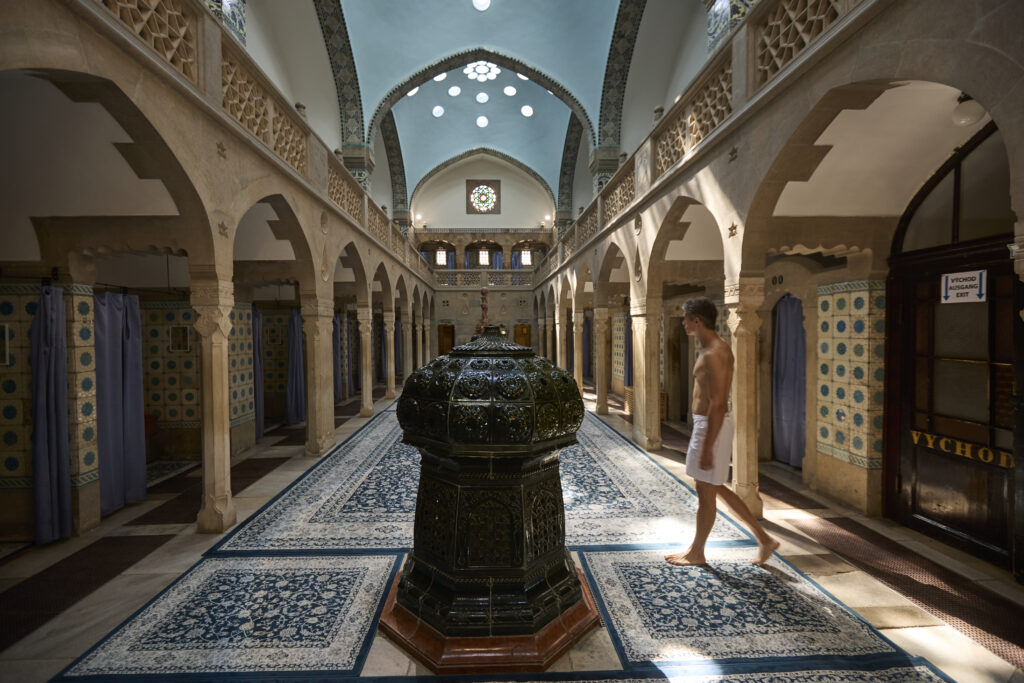
The Hammam Turkish Bath brings a touch of the Orient to the heart of the Považie region.
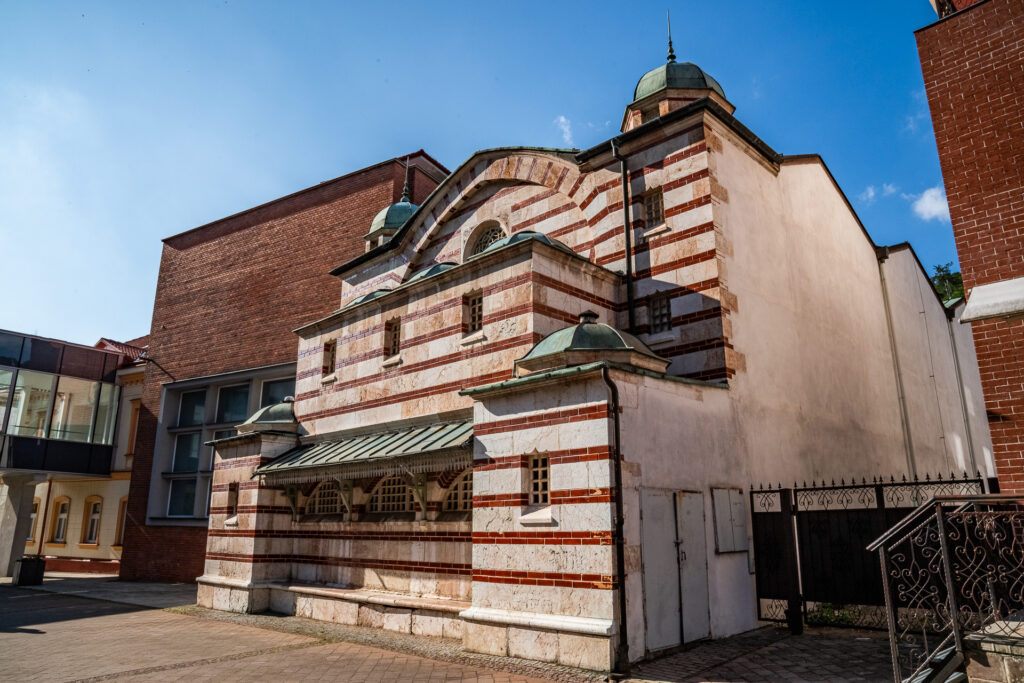
The spa’s most famous landmark is the Hammam Turkish Bath, which was completed in 1888. It was inspired by a model of a Turkish bath at the World’s Fair in Paris and was commissioned by Iphigenia de Castries d’Harcourt, the daughter of Georg Sinu. After travelling to Egypt, she obtained permission from the local ruler, Ismail Pasha, to build a similar bath in Trenčianske Teplice.
The project was carried out by the architect František Schmoranz Jr., and the result is a unique building. Today, the exotic interior of the Hammam is open to spa guests and the public. A tour of this historic monument, complete with commentary on its history, is enhanced by a belly dancing performance every Tuesday at 3.30pm.

Spas Today: Treatment, Relaxation and Wellness
The spa complex features historic and modern thermal pools, including Sina, PI, PII and PIII, as well as the outdoor GRAND pool with massage features. Treatments on offer include thermal baths, hydromassages, physical therapy, rehabilitation, peat and paraffin wraps, and various wellness services. The spa park, promenades and architecture all contribute to the atmosphere of a place where treatment, tranquillity and long-standing tradition converge.