
Dubnica Castle
The Dubnica Manor House is one of the largest and most significant manor houses in Slovakia. Built between 1637 and 1642, it served as the stately family seat of the powerful Ilešházi family, who administered their extensive estates in the Považie, Orava and Liptov regions from there. Today, the manor is a national cultural monument and one of Dubnica nad Váhom’s main historical treasures.
The Ilešházi family’s ancestral home
Originally an early Baroque building with late Renaissance elements, it was constructed on the site of an older Gothic manor house. With its inner arcaded courtyard, defensive bastions, embrasures and moat, the four-winged manor house combined the comfort of a noble residence with a fortress-like function. It is precisely this combination that gives the manor its distinctive character to this day.
A manor house shaped by centuries
The manor house acquired its most distinctive appearance following a Baroque renovation between 1719 and 1730. This took place after the building was damaged during the uprising led by Francis II Rákóczi. In the 19th century, a new wing was added and the defensive moat and drawbridge were filled in.
The manor also contains the Baroque-Rococo Chapel of the Assumption of the Virgin Mary, whose decorations are among the most beautiful in the complex. The castle once housed the owners’ private apartments, a music salon, dining rooms, guest rooms and the famous Ilesházi Library, which contained thousands of rare volumes, manuscripts and old prints.
Dubnica Museum
The castle is now home to the Dubnica Museum, which was founded in 2005 and has occupied the historic Ilešházi residence since 2010.
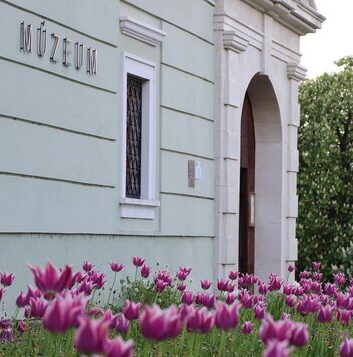
This local history museum focuses on the history of Dubnica nad Váhom and the wider region.
The exhibits highlight the histories of the noble Ilešházi and Sinovci families, as well as notable figures associated with the town. They also showcase traditional folk culture, crafts, art and daily life in the past. The collection includes historical artefacts, period documents, works of art and everyday objects.
With more than 15 authentically furnished rooms, visitors can glimpse the lifestyle of the nobility from the late 17th to the early 20th century. Visitors can admire historical furniture, ceramic tiles, portraits of the Ilésházi family, weaponry and artworks from the original family collection.
The manor also houses a gallery featuring works by Dubnica artists and the City Information Centre, establishing it as a vibrant cultural hub.
Park and Grotta – the romantic pride of the Považie region
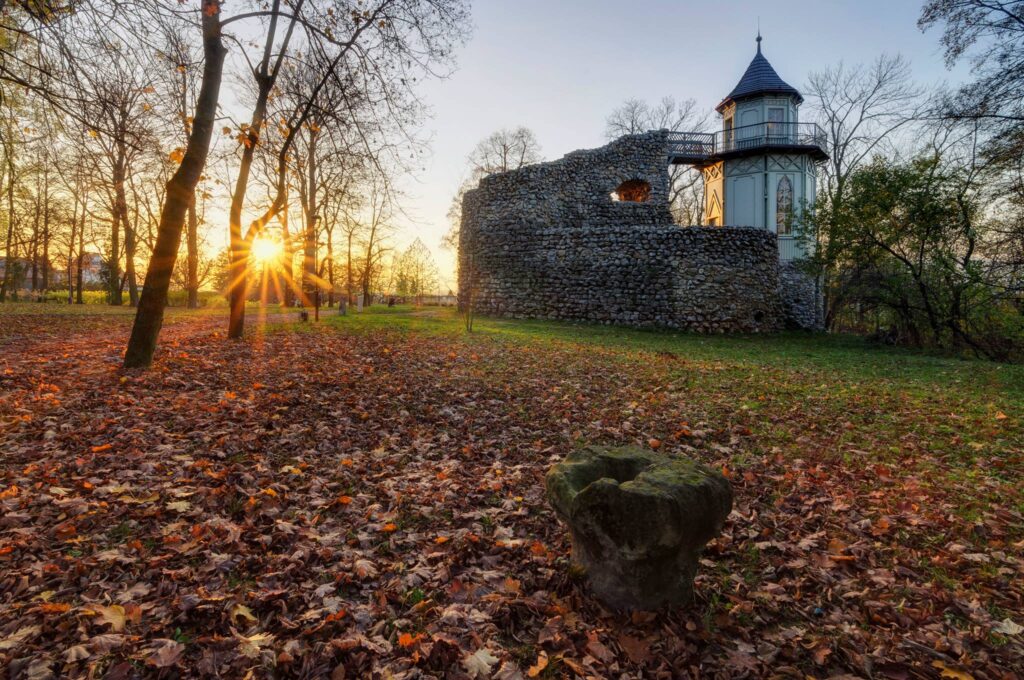
Ján Baltazár Magin Park, originally a Baroque French-style park, was later converted into a Romantic English-style landscape park and is located adjacent to the manor house. Its greatest gem is the Grotto, which features a lookout tower popularly known as Babylon.
It is one of only two preserved grottos in Slovakia, and the only one that has been fully restored. This artificial cave features an octagonal gazebo and an observation tower which offer magnificent views of the Považie region and the Vršatec Mountains. Restored in 2009–2010 based on period photographs, the grotto is now one of the most romantic spots in the region and a popular location for wedding photo shoots.
How to get here
Dubnica Manor is located right in the centre of Dubnica nad Váhom, making it easily accessible by car, train or bus.
- By car: Dubnica nad Váhom lies just off the D1 motorway (Bratislava–Žilina). The exit is clearly signposted, and the manor is just a few minutes’ drive from the city centre. Parking is available near the manor house or in the city centre.
- By train: The city has its own train station on the main Bratislava–Žilina line. From the station, it is a 15-minute walk to the manor house.
- By bus: The bus station is located in the city centre. The castle is a short walk away from there.
- On foot or by bike: The castle is located in the city park and is connected to local walking trails. Dubnica nad Váhom is a good starting point for cyclists within the Považie region.