
The Executioner’s House
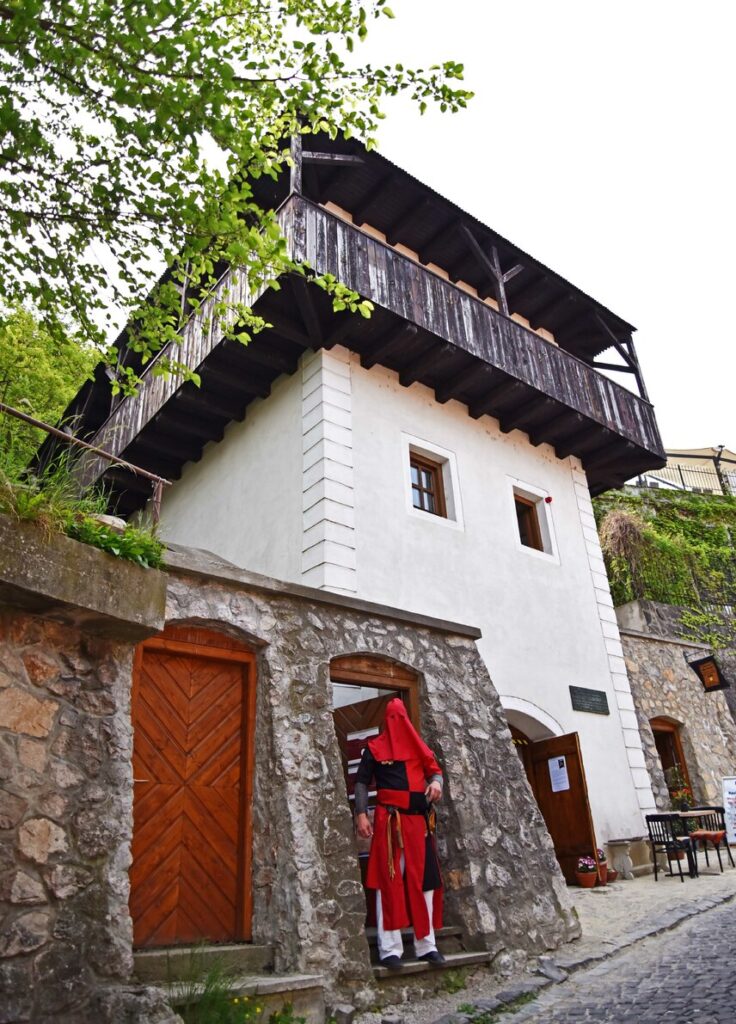
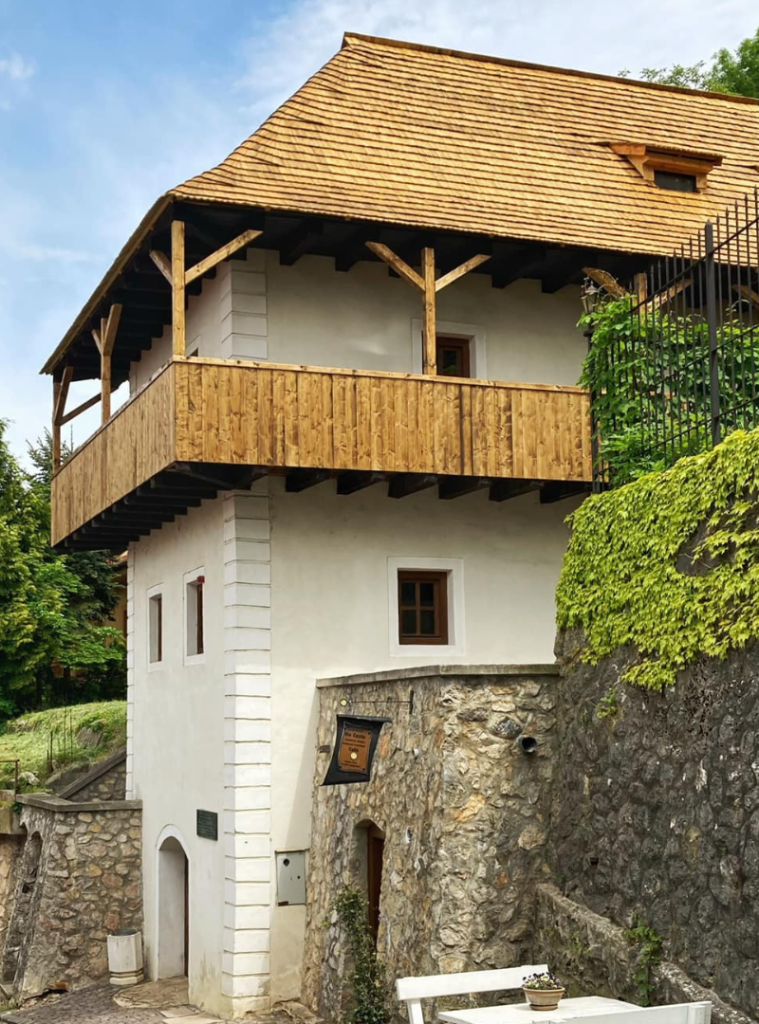
If you’re interested in the history of old Trenčín and enjoy a touch of mystery, you shouldn’t miss the Executioner’s House. This unassuming Renaissance building is one of the city’s best-preserved townhouses and the only structure of its kind to survive without significant alterations.
Its architecture — with its circular gallery, black kitchen and service quarters — reveals how citizens of Trenčín lived centuries ago.

A Mysterious Place of Justice
The name ‘Executioner’s House’ still raises many questions today. Was there really an executioner who lived here? Did the house serve as a prison? While historical sources differ, several suggest that, in the 16^(th) and 17^(th) centuries, the house may have been the residence of the town executioner. Later, the town bailiff reportedly lived there. What is certain, however, is that Executioner’s House is closely linked to the administration of justice and the security of the city in the past.
During the period when order was maintained by the mayor, the city council, the city captains or the guard, the administration of law and justice in Trenčín was clearly hierarchical. Minor offences were handled by the city magistrate, while more serious cases were heard at special sessions. Security was maintained by city guards, bailiffs or gatekeepers.
Following the departure of the military garrison at the end of the 18th century, the city’s security became the responsibility of the military guard, which comprised up to 170 men at the start of the 19th century.
What to see at the Executioner’s House
Today, the Executioner’s House showcases three captivating exhibitions that transport visitors to various eras in the city’s history.
Master of Justice – The Executioner: Discover the world of the city executioner from the 16^(th) to the 18^(th) century. The most remarkable items are the original execution swords from the 16^(th) century. Also of interest is the richly decorated 18^(th)-century municipal chest featuring allegories of virtues and vices, which were intended to encourage city council members to make fair and honest decisions.
Crafts, Guilds, and the Guild System: This exhibition explores how guilds functioned in Trenčín and the surrounding area from the 14th century until their dissolution in 1872. See guild seals, chests, call-to-order boards and objects documenting the lives of craftsmen and their rules.
Get a glimpse into the daily lives of townspeople from the second half of the 19th century through to the interwar period. Discover period household furnishings, hygiene items, copper bed warmers, a travel cosmetic case and an elegant, hand-embroidered men’s bathrobe.
Our tip
Purchase a discounted combined ticket to visit the branches of the Trenčín Museum and explore Trenčín Castle, the Executioner’s House, the Ossuary, the Podjavorinské Museum in Nové Mesto nad Váhom, and the birthplaces of Ľ. Štúr and A. Dubček in Uhrovec, Drašković Manor and the noble residence of the Ambro family in Beckov. The combined ticket is available at any branch and is valid for ten calendar days, including the day of purchase.